

Alternative to Qt – Why teams move from
Qt to Slint.
Still on Qt 5? What its end of support means for you
Advantages of Slint over Qt
Compiled, not interpreted
Avoid garbage-collection pauses and JIT performance cliffs.
Slint files compile to native code at build time. Even with the new QML compiler, some QML bindings and functions are interpreted or compiled just in time.
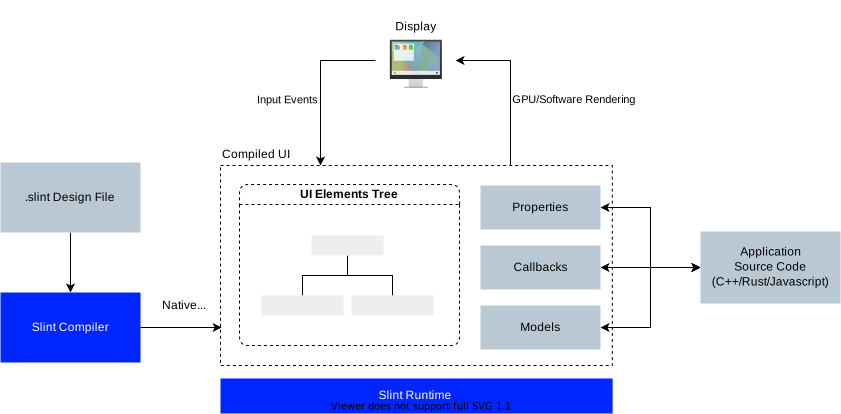
Errors at compile time
The Slint compiler checks every binding and property when you build. In QML, bindings and functions can fail at runtime, where they are harder to track down.
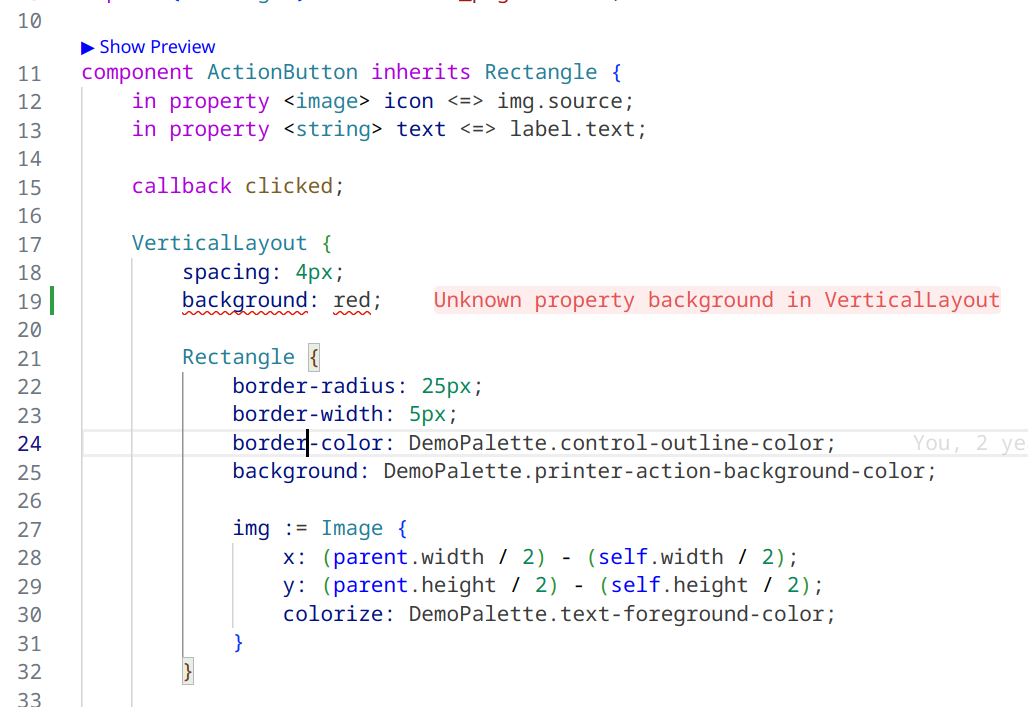
Live preview
Iterate on the design in real time: tweak colours, animations, geometry or text and see the change instantly.
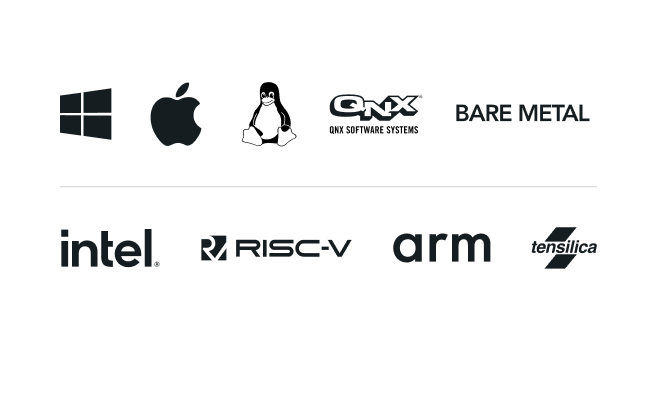
One codebase, every target
The runtime runs from microcontrollers with under 300 KiB of RAM to desktops, on bare metal or a full operating system, without a separate product for MCUs.
Keep your favourite editor
Use the language server or the VS Code extension for completion, live preview, navigation, diagnostics and syntax highlighting.
See supported editors →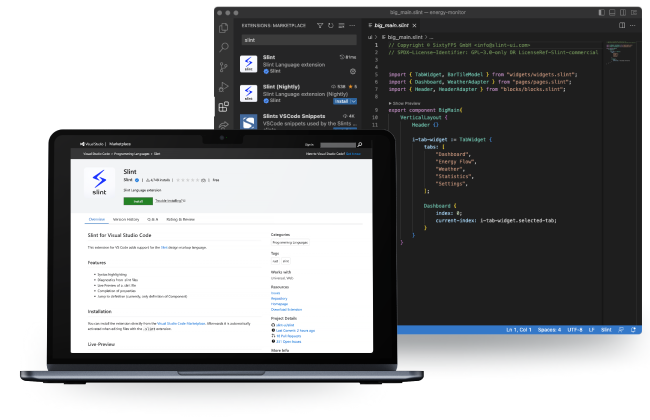
Built in Rust, plays well with all
Slint is written in Rust for memory safety, performance and concurrency, with native APIs for C++, Rust, JavaScript and Python.
Beyond UI: using Slint with C++ →
Migrating from Qt to Slint?
Slint is replacing our HMI written in Qt QML and has reduced or eliminated bugs, improved performance, and made it much easier to rapidly design the UI.
We migrated the HMI of our EV chargers from Qt to Slint as it provides us flexibility, high performance and value-for-money along with great support.
For a large project like LibrePCB… the declarative approach is really a game-changer for us developers!
SK Signet: an EV charger HMI moved from Qt
The no. 1 EV charging provider in the U.S. moved the HMI on its chargers to Slint. It scales to the 15-inch and 32-inch touch displays on the chargers and opens new business for charging-station operators.
Read the success story →